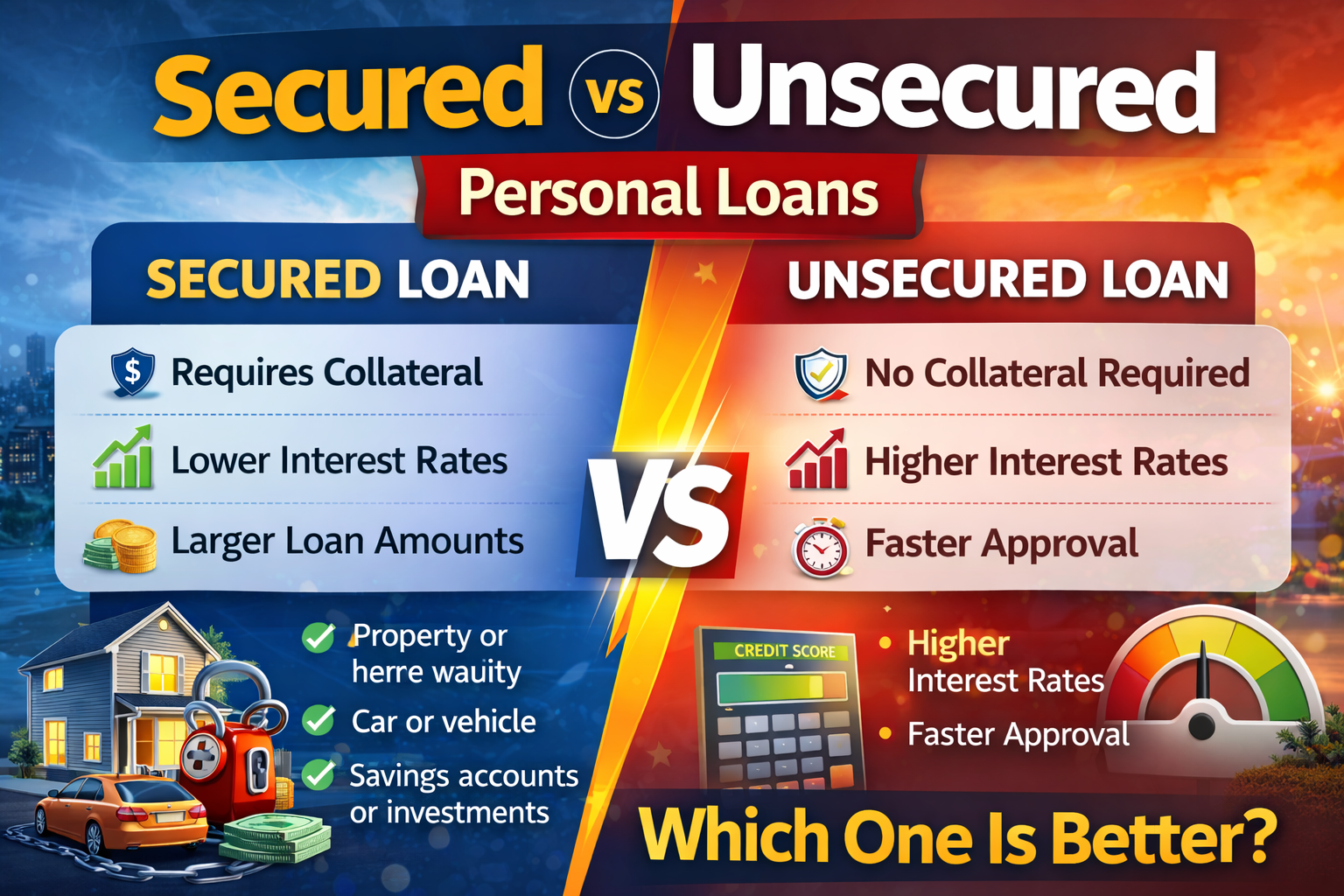
When applying for a personal loan, borrowers typically have two main options: secured loans and unsecured loans.
The biggest difference between them is whether you need to provide collateral—an asset such as property, a vehicle, or savings—as security for the loan.
Choosing the right option depends on your financial situation, credit score, and risk tolerance. Understanding the differences can help you decide which loan type fits your needs best.
What Is a Secured Personal Loan?
A secured personal loan requires the borrower to provide collateral, which the lender can claim if the loan is not repaid.
Common examples of collateral include:
- Property or home equity
- Car or vehicle
- Savings accounts or investments
- Gold or valuable assets
Because the loan is backed by collateral, lenders face less risk, which usually means lower interest rates and higher borrowing limits.
Pros of Secured Loans
- Lower interest rates
- Higher loan amounts
- Easier approval, even with lower credit scores
- Longer repayment periods
Cons of Secured Loans
- Risk of losing your asset if you default
- More documentation required
- Approval process may take longer
Common examples of secured loans include home loans and car loans.
What Is an Unsecured Personal Loan?
An unsecured personal loan does not require collateral. Instead, lenders approve the loan based on factors such as:
- Credit score
- Income
- Employment history
- Financial stability
Common examples include:
- Personal loans
- Student loans
- Credit cards
Since lenders take on more risk when no collateral is involved, unsecured loans usually have higher interest rates and stricter approval requirements.
Pros of Unsecured Loans
- No risk to personal assets
- Faster approval process
- Less paperwork
- Flexible use of funds
Cons of Unsecured Loans
- Higher interest rates
- Lower borrowing limits
- Requires good credit for approval
Key Differences Between Secured and Unsecured Loans
| Feature | Secured Loan | Unsecured Loan |
|---|---|---|
| Collateral | Required | Not required |
| Interest Rates | Lower | Higher |
| Loan Amount | Usually higher | Usually lower |
| Approval Difficulty | Easier | Harder |
| Risk to Borrower | Asset may be seized | No asset risk |
Secured loans generally provide better interest rates and larger loan amounts, while unsecured loans offer more flexibility and faster access to funds.
Which Loan Is Better?
The right loan depends on your financial situation.
Secured Loans May Be Better If:
- You want lower interest rates
- You need larger loan amounts
- You have assets available as collateral
- Your credit score is not very high
Unsecured Loans May Be Better If:
- You do not want to risk personal assets
- You need quick access to funds
- You have a strong credit score
- You want a simple application process
Financial experts often say the best choice depends on your risk tolerance and financial goals.
Example Scenario
Imagine you want to borrow $20,000.
Secured Loan
- Interest Rate: 8%
- Requires collateral (car or property)
Unsecured Loan
- Interest Rate: 14%
- No collateral required
In this case, the secured loan costs less in interest, but it also carries the risk of losing your asset if you fail to repay the loan.
Tips Before Choosing a Loan
Before deciding on a loan type, consider the following factors.
1. Check Your Credit Score
A higher credit score can help you qualify for lower interest rates and better loan terms.
2. Compare Multiple Lenders
Different lenders offer different rates and fees. Comparing offers can save thousands in interest.
3. Evaluate the Risk of Collateral
Make sure you are comfortable with the risk of losing your asset if you choose a secured loan.
4. Choose an Affordable Repayment Plan
Select a repayment schedule that fits comfortably within your monthly budget.
Making the right decision can help you avoid financial stress and reduce total borrowing costs.
Conclusion
Both secured and unsecured personal loans have advantages and disadvantages.
Secured loans typically offer:
- Lower interest rates
- Larger loan amounts
- Easier approval
However, they require collateral and carry the risk of losing your asset if the loan is not repaid.
Unsecured loans provide:
- No collateral requirement
- Faster approval
- More flexibility
But they usually come with higher interest rates and stricter credit requirements.
The best option depends on your financial situation, credit history, and comfort level with using assets as collateral.
FAQs
1. Which loan is cheaper: secured or unsecured?
Secured loans are usually cheaper because lenders face less risk when collateral is provided.
2. Can I get a secured loan with bad credit?
Yes. Since the loan is backed by collateral, lenders may approve borrowers with lower credit scores.
3. Are personal loans usually secured or unsecured?
Most personal loans are unsecured, meaning they do not require collateral.
4. What happens if I default on a secured loan?
The lender can seize the collateral used to secure the loan.
5. Which loan is easier to get?
Secured loans are often easier to obtain because the collateral reduces risk for lenders.